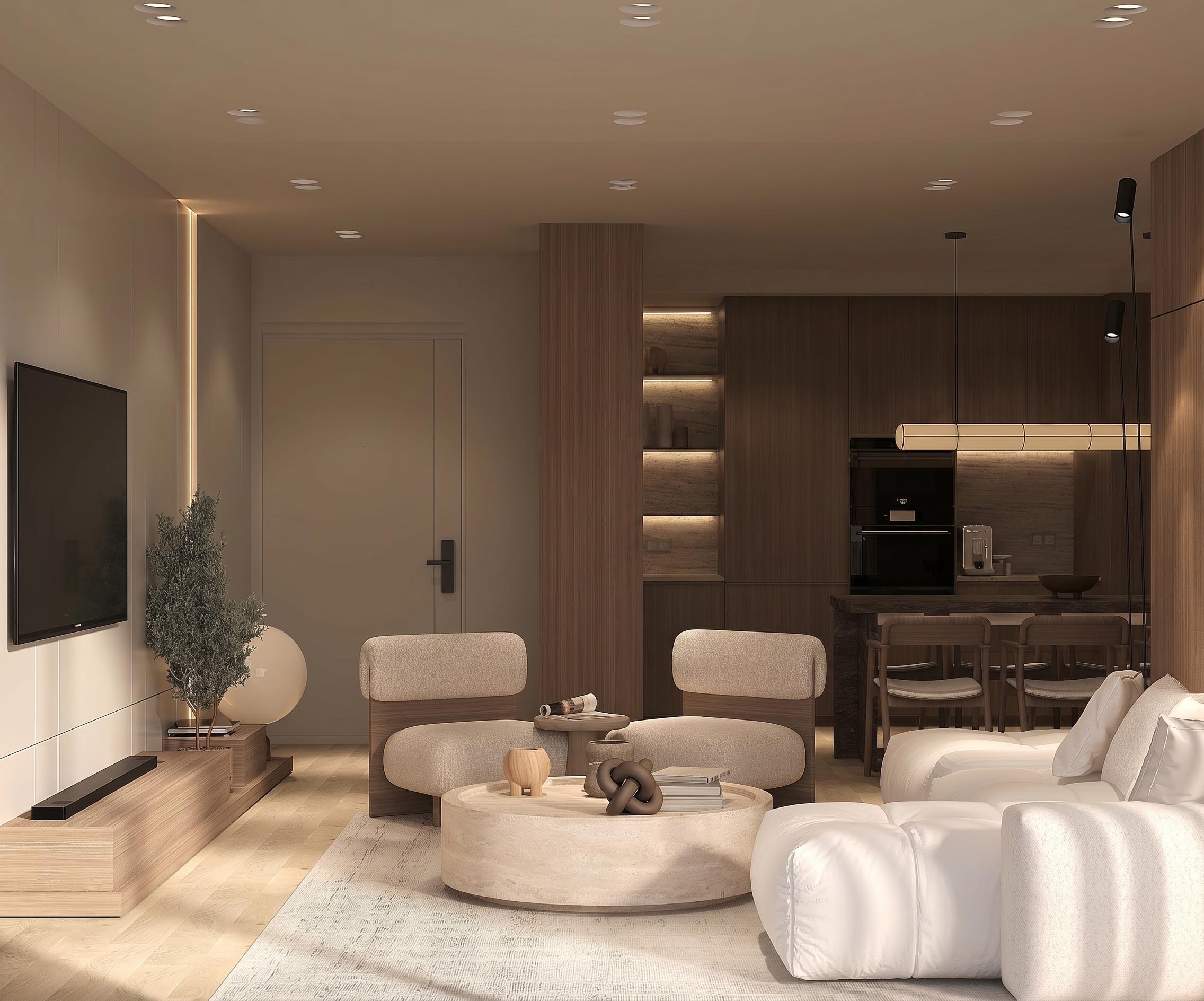
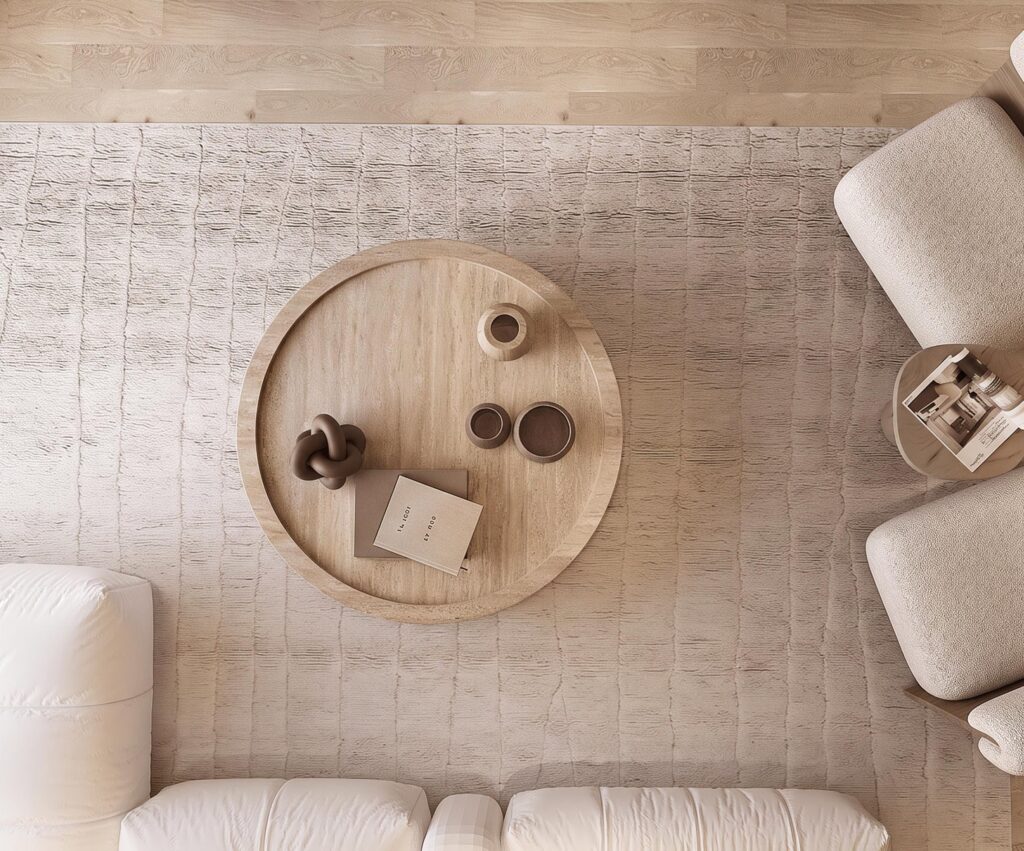
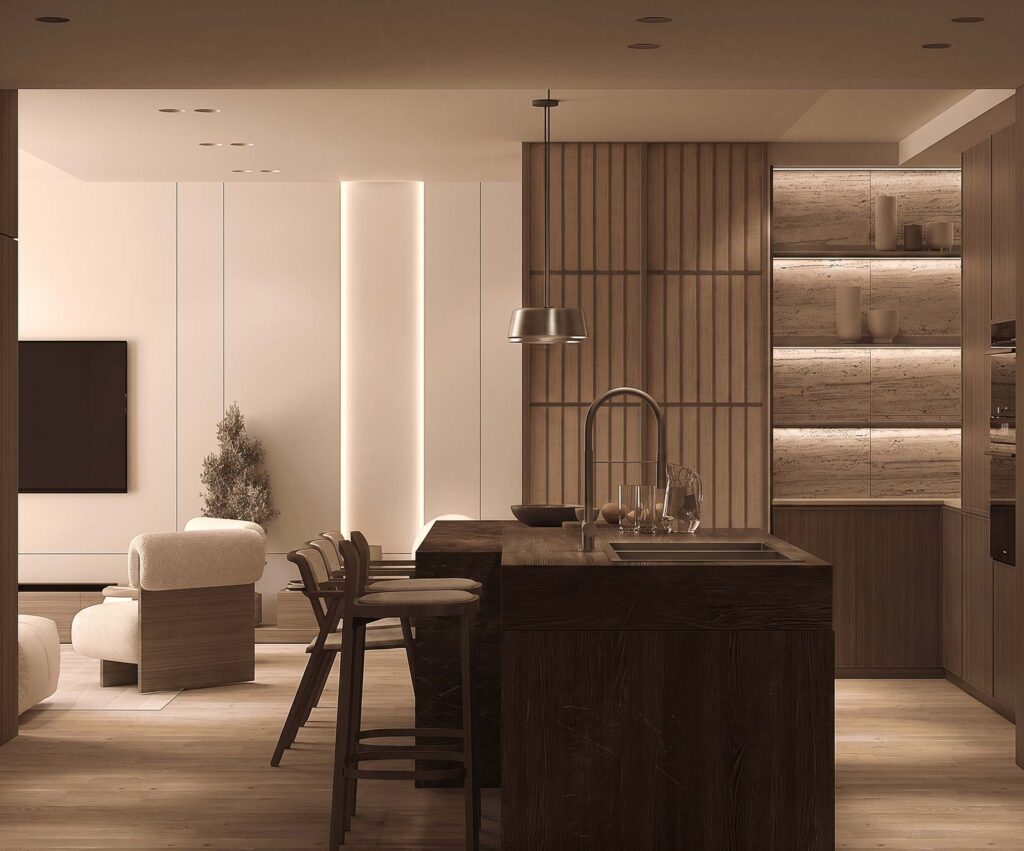
One of the defining characteristics of this trend is the emphasis on authentic materiality. Surfaces are no longer concealed or overly treated; instead, they are celebrated for their inherent qualities.
- Natural stone is often left slightly rough or honed, allowing its grain and imperfections to remain visible.
- Concrete is used in a more refined way, with smoother finishes or subtle textures that highlight its depth rather than its rawness.
- Wood—especially light oak, ash, or walnut—introduces warmth and a sense of craftsmanship.
- Limewash and mineral plasters are increasingly popular for their soft, breathable, and slightly irregular finish.
These materials contribute to a layered sensory experience, where architecture is not only seen but also felt. The slight imperfections and variations create richness without visual clutter.
Light as a Design Material
In warm minimalism, light plays a crucial role in shaping space and enhancing material quality. Rather than relying on strong contrasts, designers favor diffused, ambient lighting that gently interacts with surfaces.
- Natural light is filtered through sheer curtains or textured glass
- Shadows are soft and gradual, enhancing depth without harshness
- Warm color temperatures (2700K–3000K) reinforce a cozy, inviting atmosphere
This approach allows materials like stone, plaster, and wood to subtly change throughout the day, creating a dynamic yet शांत spatial experience.
Facade Design: Subtle Depth and Rhythm
On building exteriors, warm minimalism translates into controlled compositions with refined detailing.
- Facades often use repetitive grids softened by material variation
- Slight recesses, frames, and reveals create shadow lines without excessive articulation
- Balconies and openings are integrated seamlessly, avoiding heavy contrasts
Instead of dramatic forms, the focus is on proportion, rhythm, and depth, resulting in buildings that feel calm, elegant, and timeless within their urban context.
Interior Atmosphere: Comfort Meets Precision
Inside, warm minimalism prioritizes livability and emotional comfort.
- Open spaces are balanced with soft transitions rather than sharp separations
- Furniture follows simple geometries but uses rich, tactile fabrics (linen, wool, bouclé)
- Decorative elements are minimal but intentional—often handcrafted or natural
The result is an environment that feels both architecturally precise and deeply personal, avoiding the sterility that earlier minimalist interiors sometimes produced.
Why This Trend Matters
Warm minimalism is not just an aesthetic preference—it reflects changing expectations about how spaces should perform. In a fast-paced, digital world, users increasingly seek environments that promote well-being, calmness, and connection to nature.
This trend also aligns closely with sustainability goals:
- Natural materials often have lower environmental impact
- Neutral palettes age better, reducing the need for frequent redesign
- Timeless design extends the lifecycle of buildings